
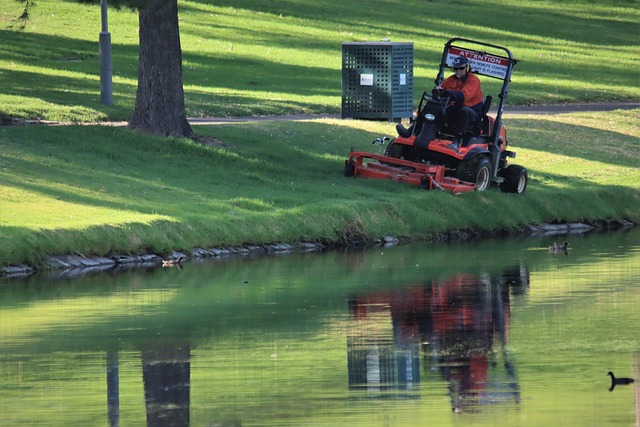
In 2021, the lawn care/landscape industry had a market size of over $100 billion and it’s been growing at a rate of 5% per year. Incredible! (This doesn’t reflect the do-it-yourself lawn care industry…..more in a sec). This industry hires about 1 million workers, who mow lawns, landscape and do groundskeeping for businesses as well as residential lawns.
In this post, I’ll explore just the tip of the iceberg on this huge industry. We’ll look at the history of this business in the US, as well as its influence on much of the American aesthetic of what constitutes beauty in the human-built landscape.
The History of the Lawn Care Industry (Cliff Notes Version)
Spoiler alert: I am no expert in history. This is a brief glimpse, based on reading I have done, in the form of articles, book chapters and other legitimate published stuff.
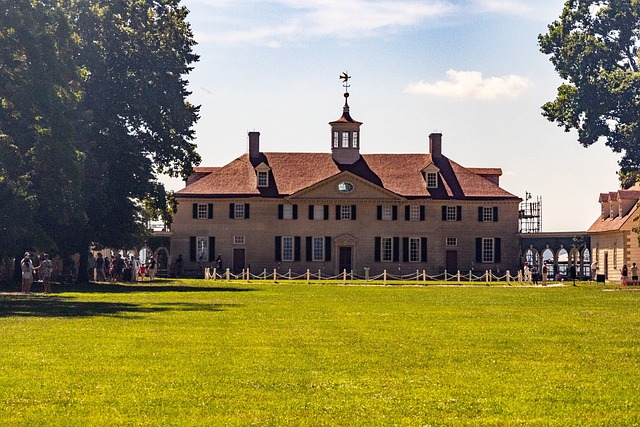
Lawns, with expanses of grass, shade trees and sometimes flower gardens, were first the domain of wealthy colonial landowners like George Washington and Thomas Jefferson, copying the landscape architecture of British gentry as status symbols of their colonial wealth and prominence.
But it wasn’t until the industrial revolution, with railroad and street car transportation, and the post- Civil War era, when housing villages were put in place on the outskirts of growing cities, that a desire for lawns as a status of success became a reality for the rising middle class.
In 1870, Frank Scott published a book entitled, “The Art of Beautifying Suburban Home Grounds of Small Extent;” the opening quote by Lowell, states “The landscape, forever consoling and kind, pours her wine and her oil on the smarts of the mind.” The book, all 702 pages, is dedicated to helping suburban homeowners “realize beautiful home surroundings on small grounds… with minimal expense and care.” He also remarks that “all civilization is marked by the touch of the arts which have subjugated the ruder elements of human and vegetable nature to mould and rearrange them….Not to reproduce the rudeness of Nature, but to adapt her to our civilized necessities, to idealize and improve, to condense and appropriate her beauties…” In this book, then, was born the idea of the “velvety lawn flecked with sunlight and the shadow of common trees.” The book pontificates about how to establish a suburban lawn and yard, and how the participation in this “decorative gardening” develops a sense of community with neighbors since the expanses of land are modest and not estate-sized. Coincidentally (or not?) a couple years before the book was published, the lawn mower was invented, soon followed by the invention of a water sprinkler. A light weight push mower, invented by Elwood McGuire, was exhibited at the 1893 Chicago World’s Fair. Mowing and lawn care were now within reach of homeowners who didn’t have a dedicated groundskeeping staff.
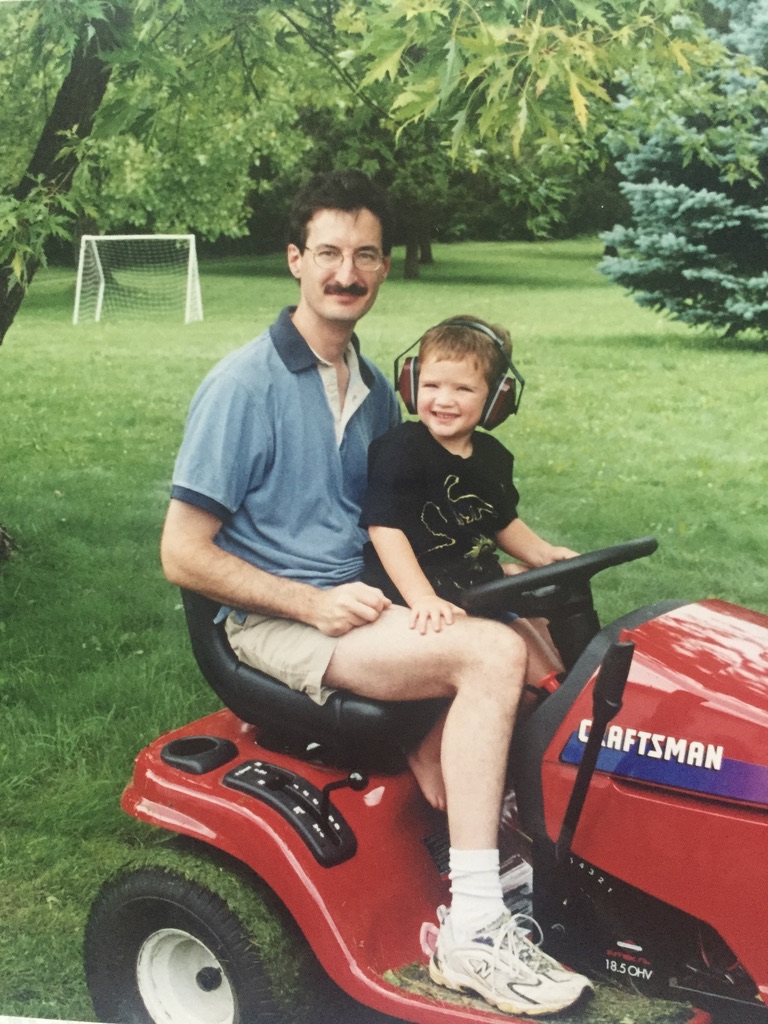
Lawn mowers and sprinklers were heavily advertised, and the runaway best seller book fueled the idea that a green grassy lawn that is carefully tended was crucial for good standing in the neighborhood. This enabled the creation, in the post Civil War era, of suburban communities outside of Chicago, the first designed by Central Park’s renowned landscape architect, Frederick Law Olmsted. The lawns were all very similar and mostly not divided by fences, to create a more unified (read: more uniform) community of green spaces. The GI Bill after WWII saw a surge in suburban development and home ownership and, by 1960, owning a home with a grassy yard, a white picket fence and a lawn mower became the American Dream. At around the same time, golf became the wealthy and middle class sport of choice and golf tournaments were televised in color, driving Americans to desire the uniform green, carefully sculpted and heavily maintained lawn as an ideal. To achieve this level of “perfection,” homeowners invested in lawn care services or power mowers, irrigation systems and an arsenal of toxic chemical pesticides.
Now, lawns make up 2% of US usable land, which doesn’t sound like much, but this 49,000 square miles uses more water than any agricultural crop in the US. To waste that much water on a monoculture that has no purpose other than to look green is absolutely absurd.
Sources of information: 1. https://www.nytimes.com/2019/08/09/video/lawn-grass-environment-history.html; 2. “American Green….” 3. https://www.history.com/news/lawn-mower-grass-american-dream
Economics of the Lawn Care Industry
I found this great economics review of the economic impact of the lawn care industry in the US in 2022. (Here’s a link to the full article:Haydu, Hodges and Hall, 2022). The article considered five categories in the industry: sod farms, lawn care, lawn care retail stores, lawn equipment, and golf courses. The total impacts totaled many billions and lots of jobs (over 800,000 jobs):
- sod farming yielded about $3 billion overall and 17,000 jobs
- lawn care services about $32 billion overall and almost 300,000 jobs
- lawn equipment yielded over $10 billion and 34,000 jobs; lawn care retail about $15 billion and more than 114,000 jobs
- golf courses about $40 billion and over 360,000 jobs.
This is an enormous industry that is the second largest in the overall agriculture industry. These economic impacts, importantly, do NOT include the lawn chemical part of the industry (next paragraph)- just goods, services, and business taxes. The lawn care industry is one of the biggest growing industries in the US, topping 5%/year and is a higher rate of growth than the entire US economy.
The homeowner lawn and garden chemical industry is also a behemoth in this overall market. A 2021 article from PRS Newswire projected that this global market is likely to top about $11 billion in a few years, with the US the largest share of that market (about $8 billion in 2021). In the report, the focus was on home garden chemicals, for DIY gardeners. This would be those people who buy the lawn chemicals off the shelves at their local hardware store (or order from Amazon). According to the US Census Bureau report, the US agrichemical industry revenue in 2017 was about $42 Billion, using about 45 billion pounds of pesticides a year and about 16-20% of the global market that, in 2021 grossed about $218 billion!
All this boils down to the lawn and lawn/agrichemical industry being a GOLIATH, with the power of money, as well as the brainwashing of the US culture, to maintain a stranglehold grip on all of us. With the catastrophic effects of this mega-industry on our environment, our planet, our health and our wallets, it’s important to share this information to try to counter the brainwashing and stop these harmful ways. We also need to pay better attention to any news that manages to leak out- it’s incredible how little most people are aware of the dangers and harms of this industry. My guess is that staying under-the-radar is the intent. Stay tuned!





May 21, 2023
Just in case you missed it: https://youtu.be/wODoeAtULVI
Ten days left!!