A small but growing call that’s hitting the social media-waves and even news organizations is “No Mow May,” which is trying to raise awareness about the importance of early flowering plants and grasses, like dandelions, to be available for newly active bees and other pollinator insects, for sustenance and survival. In this post, I’ll delve a little bit into this new practice and whether it can actually make a difference.
No Mow May has it origins with an organization out of the United Kingdom called Plantlife that has been devoted to the preservation and conservation of native plants, pollinators and fungi since about 1970. The most prominent supporter of Plantlife is the newly coronated King Charles III. As the Prince of Wales, he was a key figure and ardent patron of Plantlife since 1999. It’ll be interesting to see how the new king will influence the UK’s efforts to sustain biodiversity and combat climate change (fingers crossed!).
Anyway, Plantlife is involved in lots of efforts with other environmental partner organizations, and they introduced No Mow May as a way to raise awareness of the harmful environmental impacts of manicured monoculture lawns, as well as the plight of pollinator, plant and fungal biodiversity loss. According to their website, the UK has lost 97% of its flowering meadows over the past 50 years.
No Mow May is catching on, albeit slowly, in the US. Beginning last year, I began seeing signs at my local plant nursery, in the local papers and also a number of towns in the area, notably New Paltz, which passed a resolution in April 2022 supporting No Mow May. No Mow May is still but a fledgling movement, competing against the mass marketing of lawn care chemicals and equipment at area hardware stores, Target and even some grocery stores.
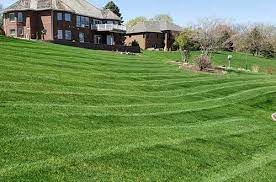
But, combined with a small and growing movement to create pollinator gardens, or participate in the Pollinator Pathway initiative, the hope is that it’ll become more popular and noticeable.
There are a number of downsides to this No Mow May idea. Most notable, perhaps, is that if you have a monoculture lawn that you’ve kept fertilized and treated with pesticides, you will not have any flowers or pollen for pollinators if you hold off on mowing your lawn for a month. You will just have long grass. If there are dandelions, they are likely to harbor pesticides from previous seasons. If this is your situation, I’d suggest putting in a small pollinator garden and discontinuing the use of pesticides if you care about pollinators, rather than participating in No Mow May.
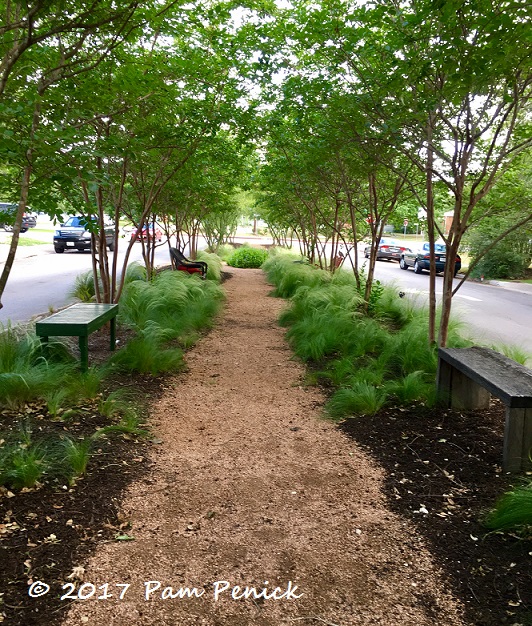
Another downside is that some locations have heavy foot traffic or use and so not mowing for a month might be problematic. For example, there are some median strips in towns or areas where people walk around a lot. In those areas, you might want to have a mown strip or walkway to enable folks to walk among the wildflowers or native plants. Here’s an example from Austin, Texas, posted by Pam Penick in 2017:
A third downside is that in many regions of our country, May is already pretty far into spring and they are well past dandelion season. It would be better in these regions to delay mowing in April, or even late March.
The goal of the No Mow May is to raise awareness about the environmentally harmful practices of manicured monoculture lawns, and also to try to change the culture a bit, to help folks appreciate there can be beauty in a lawn that is less manicured and that our lawns need to serve as important habitat for wildlife.
A non-scientific study done in 2020 in Appleton, Wisconsin demonstrated an increase in pollinators in lawns that were not mown in the month of May. This is quite promising, but of course depends on the particular lawn and landscape practices of the owners. A better and more sustainable idea for most of us, really, is to reduce the amount of grass lawn we have and plant native flowers for the pollinators to visit all season. And, of course, stop using pesticides.
Check out my podcast, Toxic Lawn!, episodes 2-4 to learn more about how incredibly harmful these chemicals are to our health and that of the environment. We need to come up with a catchy phrase to help lawn owners resist applying chemicals…..give some ideas in the comments!