
Many of us will be giving thanks at a holiday table this week. This year, make it more than just a superficial recitation of a rote blessing for food and abundance. Have a helping of gratitude with your meal and your heart will thank you.
Think about something for which you are thankful. What does gratitude feel like? Gratitude is a positive emotion or feeling. What are emotions and feelings, anyway? According to the American Psychological Association, an emotion is “a complex reaction pattern, involving experiential, behavioral and physiological elements.” A feeling is “the result of an emotion.” The neuroscientist in me wants to have a more concrete idea of exactly what these definitions mean.
Emotion or Feeling?
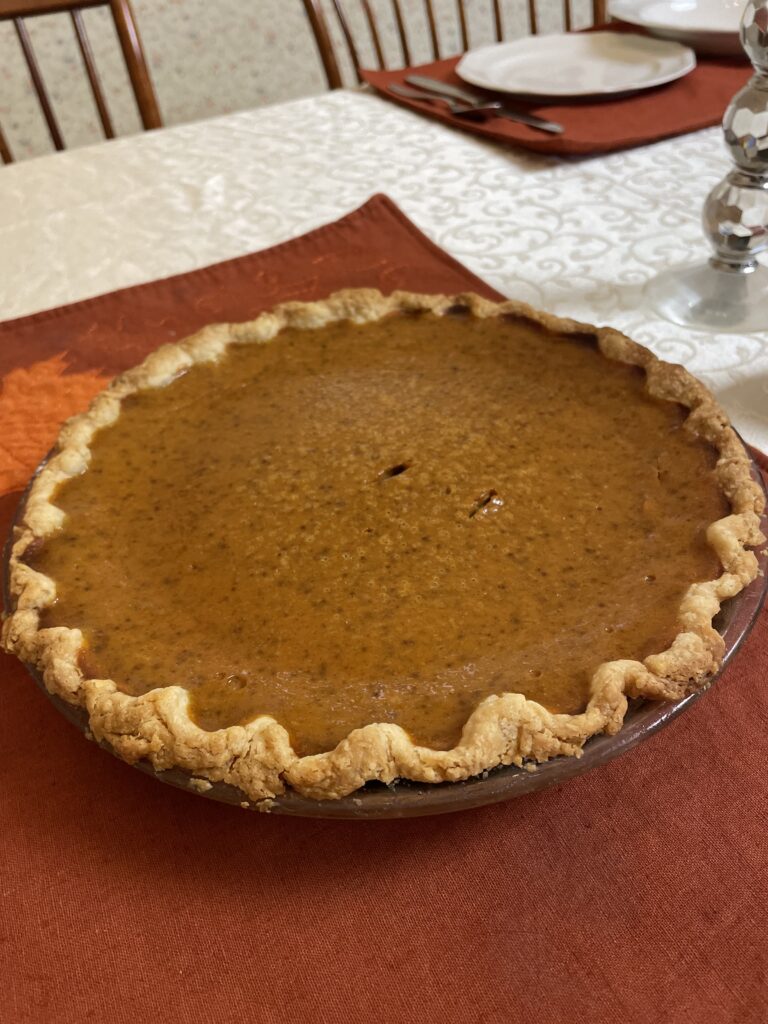
An emotion is evoked by some kind of experience or stimulus. Since we’re focusing on gratitude….when someone brings a home baked pie to your holiday gathering, you might react with gratitude, sometimes called a state of appreciation. In response to being in that cognitive state, you feel thankful. That feeling of being thankful might lead you to smile and say, “thank you.” It might also lead to physiological changes, like a slower heart rate or lower blood pressure (unless, perhaps, you are elated, or extremely happy, when the opposite might occur, or if you feel excited to eat the dessert….oh dear this is getting confusing).
Some psychologists consider emotions to be up to six different states: happiness, sadness, anger, surprise, fear, and disgust.
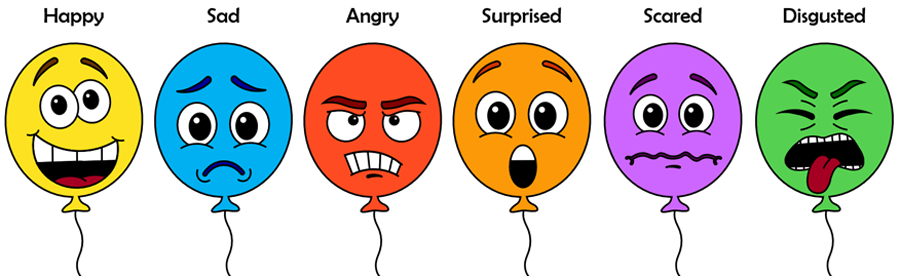
You can have different levels or intensities of these states. Like, for example, slight fear you might call nervousness and extreme fear you might call terror. And then, combinations of these six basic emotions lead to the “complex” emotions, like jealousy, regret, guilt, embarrassment, love. Hmmm. I guess gratitude might be in the happiness emotional bucket, according to that site. I experience happiness and gratitude differently, but a positive emotion, for sure.
I’m not sure I understand the difference between emotion and feeling….but that same source suggests that the emotion is a mental state resulting from some experience that affects both a cognitive state (the feeling) and a physiological response (heart rate change, muscle tenseness changes, breathing rate changes, facial expressions, for example). Feelings, they continue, are the “result of an emotion and may be influenced by memories, beliefs and other factors.” Emotions guide our behavioral responses. Another way to say this is that emotions motivate our behavior. Then, there’s mood. The American Psychological Association defines a mood as a “short-term emotional state, usually of low intensity,” not evoked by a stimulus. So, a kind of background state, like waking up on the wrong side of the bed. Lots to think about with these definitions.
When we don’t have a clear definition of something, it’s really hard for western science to actually study it. So, it’s not surprising that we still don’t know a heck of a lot about moods, emotions or feelings. We know we have them, and so do some other animals we’re beginning to realize. We know ’em when we feel ’em.
The Annual Review of Neuroscience is one of the premier journals in my field. A 2023 article by Meryl Malezieux, Alexandra Klein and Nadine Gogolla from the Max Planck Institute of Neurobiology in Germany and the University of San Francisco brought together the current state of knowledge of the brain circuitry of emotions. Those scientists consider emotions to be “functional states” and feelings to be “conscious precepts of emotions.” In other words, you might have an emotion going on, but might not be consciously aware (or feeling it). Your feeling is the conscious awareness of that emotional state. They make the argument that emotions are mental states that help organisms that have them survive, involving brain circuits that coordinate behaviors, physiological processes like hormones and cognitive processes. Neuroscientists have studied what those neural circuits are, what types of events/experiences/stimuli activate them, and how the activity in those circuits might be modified by experience.
Gratitude is considered a positive emotion/feeling. Positive emotional states involve a neural circuit involved in pleasure (liking), pleasure-seeking (wanting) and reward (yummy yahoo!). Lots of animals will behave in ways that involve this neural circuit. Humans, too. Most of the research in this area is related to addictions of various sorts. Of course, these brain circuits, really patterns of activity involving different regions of the brain, are very complex. For example, the circuits activated by seeing your favorite dessert will be different if you are hungry, versus if you’re stuffed after a Thanksgiving meal. Clearly these different motivational states, emotions, hunger/satiety, stress/anxiety (at having potentially difficult conversations at the Tday table), all might be going on at once.
Back to our feeling of gratitude and what it can do for us.
Yumeng Gu and collaborators from the University of California San Diego, UC Berkeley and UNC-Chapel Hill set up pairs of students to work on two different tasks, one where they worked together to design a bicycle, the marketing strategy and the product pitch; and the other, where they worked individually to create and deliver parts of their product pitch to a panel of evaluators. The tasks were designed to model casual work relationships teaming up on a project. These kinds of tasks usually are a bit stressful and so the investigators recorded heart rate, blood pressure and other common heart responses to stress.
Before the tasks, the teams wrote in a journal for a while and then had a brief conversation about what was in it. One team member (the expressor) for each team was given the role of talking to the other (the receiver). Half of the expressors had written about some action that their team member did for which the expressor was grateful. Everyone else just wrote about daily activities. Then, the expressors spoke for about 2 min about their gratitude or their daily activities and the receivers listened and had “normal” conversation. Then, everyone filled out a questionnaire about the conversations and how much gratitude they felt and about the types of positive emotions they might feel and then they began their tasks. Here’s a figure from that paper.
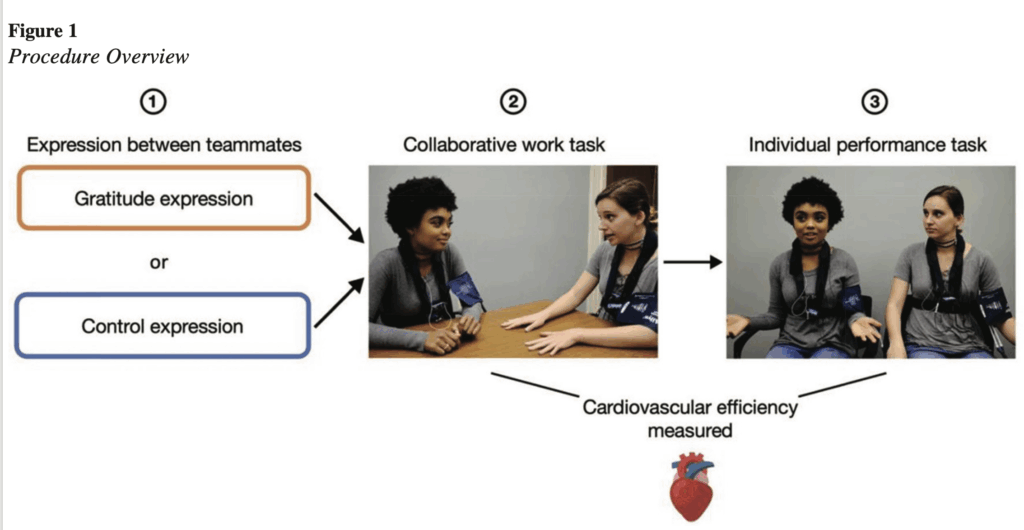
Just a little bit of gratitude……reduced the heart’s stress reactivity during the tasks. The authors concluded that positive expressions of gratitude not only enhance social interactions and relationships (lots of studies about these effects in the psychological literature, mostly with romantic partners or strangers rather than work colleagues), but also improves responsiveness to stressors like challenging tasks and public speaking.
Positive emotions like gratitude can also help with digestion (there’s next to no research on this, but, given that positive emotions reduce stress responsiveness, it makes sense to me). My grandmother always used to say that laughter at the dinner table was good for you. At my own family dinners for decades, we’d go ’round telling each other the best part of our days. It was a great way to get a glimpse of my kids’ school day and stay connected. It also helped set a happier mood at the table, which I believe is good for digestion.
So, this Thanksgiving, I hope you will conjure up an experience for which you will feel gratitude. It’ll help with any stress you might feel and help digest the meal.

I am grateful to you, my kind readers of this little newsletter. I enjoy writing it and will keep it up, although perhaps with a little less frequency for awhile. If you want to let me know your thoughts about any of the newsletters, or want to let me know a topic you’d like me to feature, please let me know in the comments.
This newsletter is devoted to explaining how biology works and how it is relevant to our daily lives. Most of us stopped learning about biology in high school or even middle school. And the way we learned it was as isolated concepts and vocabulary to memorize. I hope that this newsletter helps you rekindle that love of biology and might even help with better understanding of some of the important biology all around us. Please share this with anyone you think might want to take a look.
Thanks for reading!