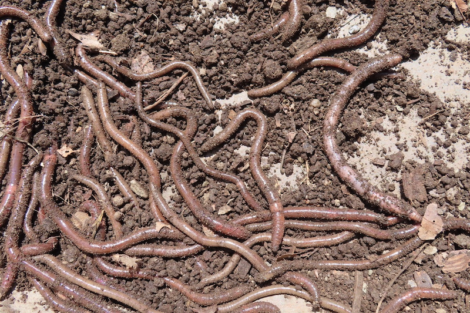
I saw one at my in-laws place in Wisconsin last summer, on the front walk. It was writhing crazily and literally jumping off the ground. Big, fat, ugly. We stomped on it til it spilled its guts. It had that tell-tale light colored band just behind its head.
A Jumping Worm!
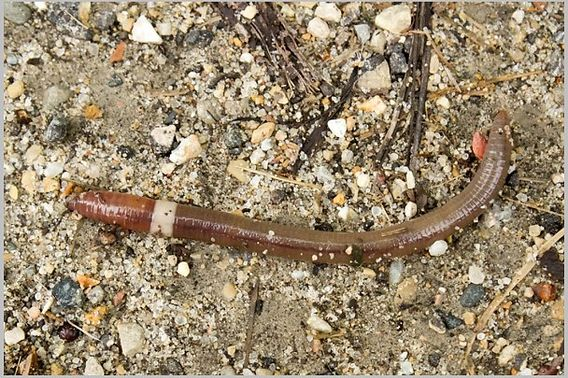
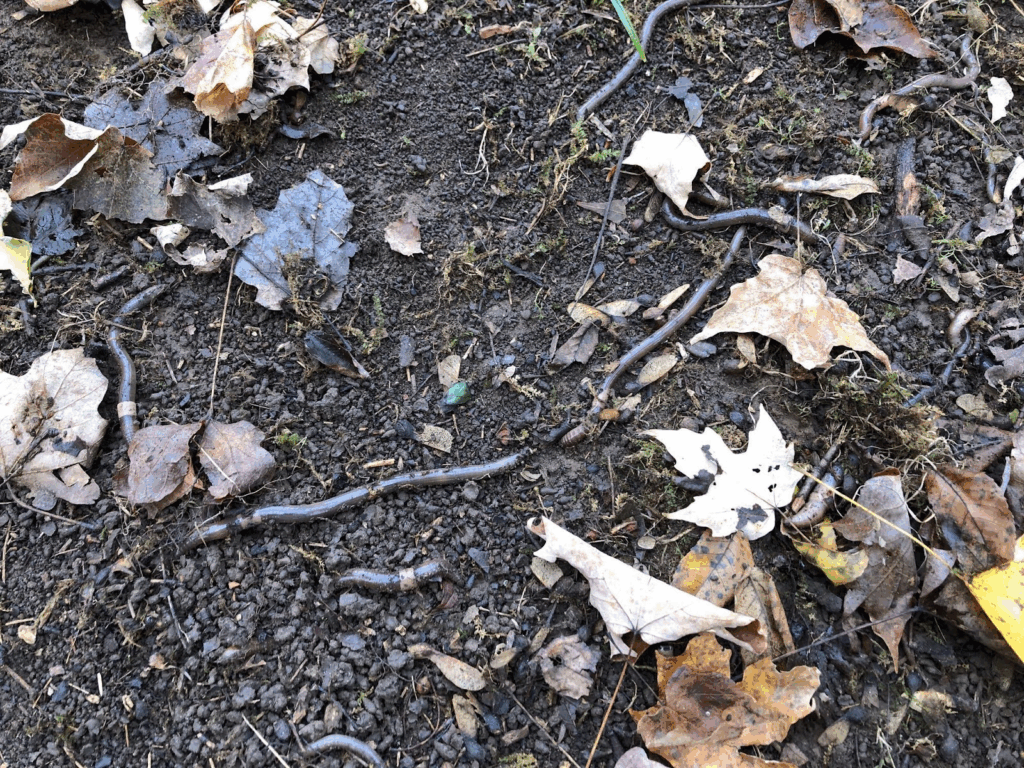
Jumping worms were actually introduced to North America over a hundred years ago, in the 1860’s, but didn’t really catch hold until another invasion event, in 1912, possibly when the Japanese gave the iconic cherry trees to Washington DC. Also called, “Disco worms,” “Alabama Jumpers,” and “Jersey wrigglers,” and even “crazy snake worms,” jumping worms originate from Asia. Given they’ve been slowly colonizing the Northeast and Southeast US and southern Ontario for decades, why are we suddenly aware of these jumpers, seeing damaged lawns and wrecked forest floors? Why are we suddenly freaking out about seeing patches of dark brown, coffee grounds-looking areas in our yards that are the castings (poop) of these worms?
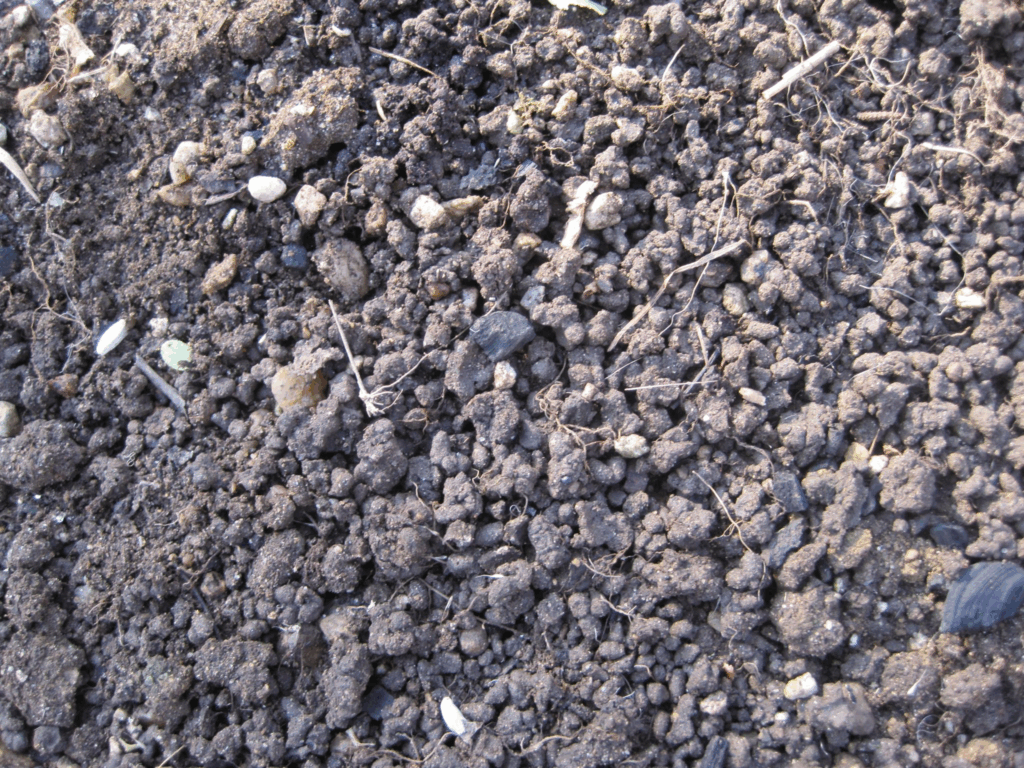
Basically, jumping worms are increasing in abundance, particularly in human dominated habitats like urban parks, suburban developments and the small bits of forest on the edges of developed areas. The cocoons and even adults run off with rains, flowing across land and into wetland areas near streams. They get transported by landscapers that collect, remove and mulch leaves for composting. The increasing winter temperatures, leading to more frost-free days, are favoring their march northward. A lot of what I’ve learned about jumping worms is from a 2021 paper by Chih-Han Chang and colleagues from National Taiwan University.
Today’s newsletter will explore what it takes for a species to become invasive and why that’s harmful to the other species around it.
When is a species considered invasive?
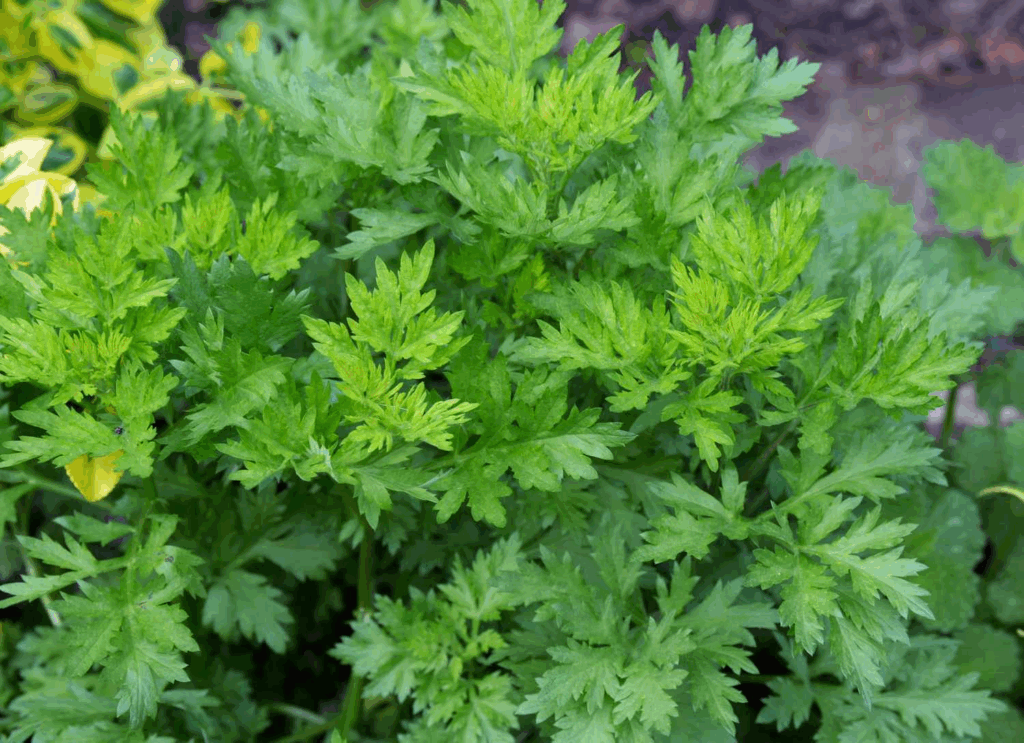
Mugwort
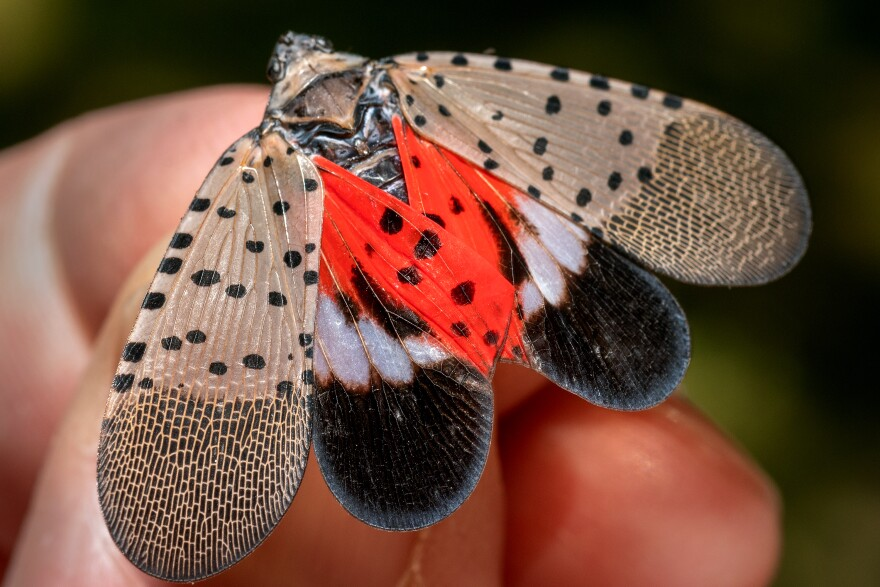
Spotted Lanternfly
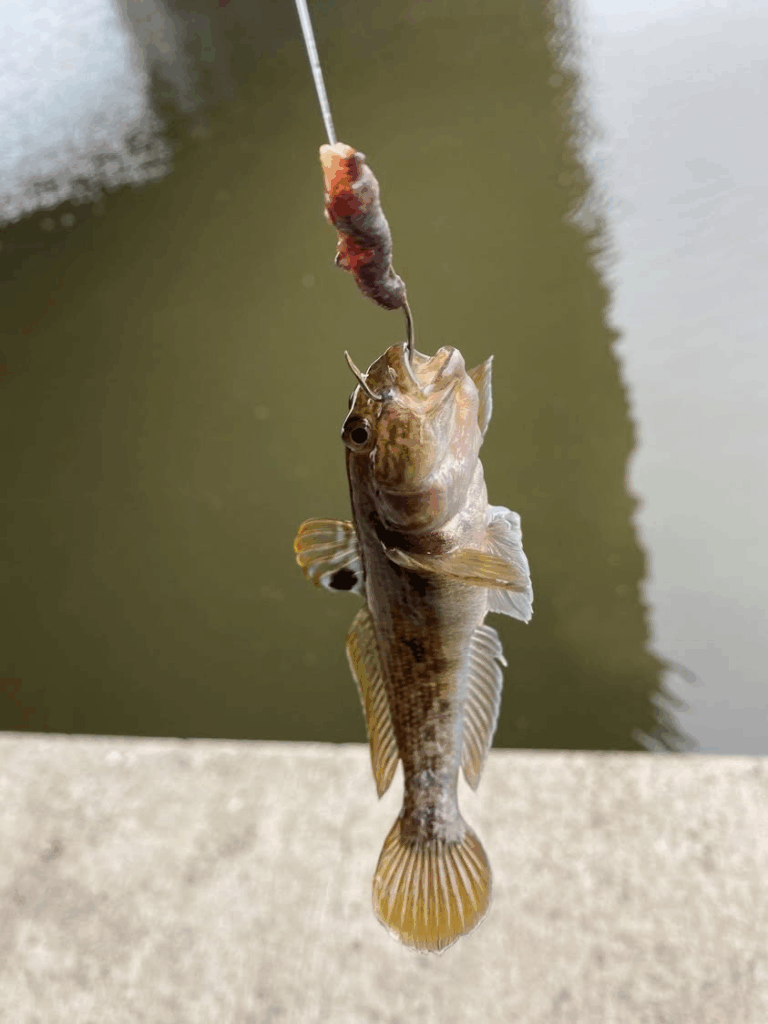
Round Goby
The three images above are invasives that are currently wreaking havoc in our area (the Hudson Valley).
Most groups define an invasive species as one that is not native to the ecosystem in which it finds itself AND that causes harm, either to the native species in the area, the functioning of the ecosystem or the economy. Almost all invasive species have been introduced by humans- inadvertently during transport/trade, or intentionally for gardening or other purposes. To become invasive, the species begins to take over an area, crowding out native species or becoming overpopulated. They often have few, if any, predators, and can outcompete the native species in the area. Not all invasives are non-native, though. We have examples of “native invaders” as well. Most obvious in the Northeast US right now are white-tailed deer. Deer have no real predators left other than cars, and suburban and even urban yards and parks provide them a veritable feast of yummy plants. Deer particularly enjoy the suburbs, but are found in many cities in the Northeast and Midwest as well. Anyway, I digress.
The Life History of Jumping Worms
Since their introduction, they have been jumping their way (mostly in soil as ornamental plants are trafficked around the US) through Maryland, and the southern US, the northeast and into the midwest. They have even jumped to California, despite strict restrictions on plant imports. We have about 16 different species of jumping worm in the US across 38 different states at this point, and these worms are also found in Central and South America, Europe and even Australia.
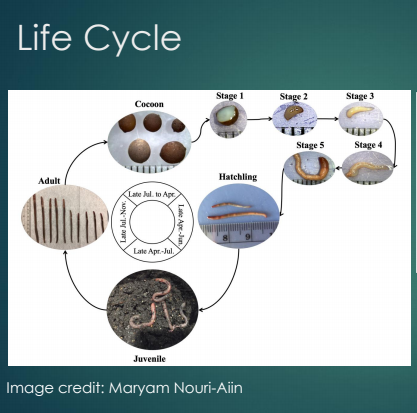
The worms hatch from tiny, but tough cocoons in April, reaching adulthood by summer, laying eggs/cocoons, about 50-300 each, that can survive drought and cold winter temperatures.
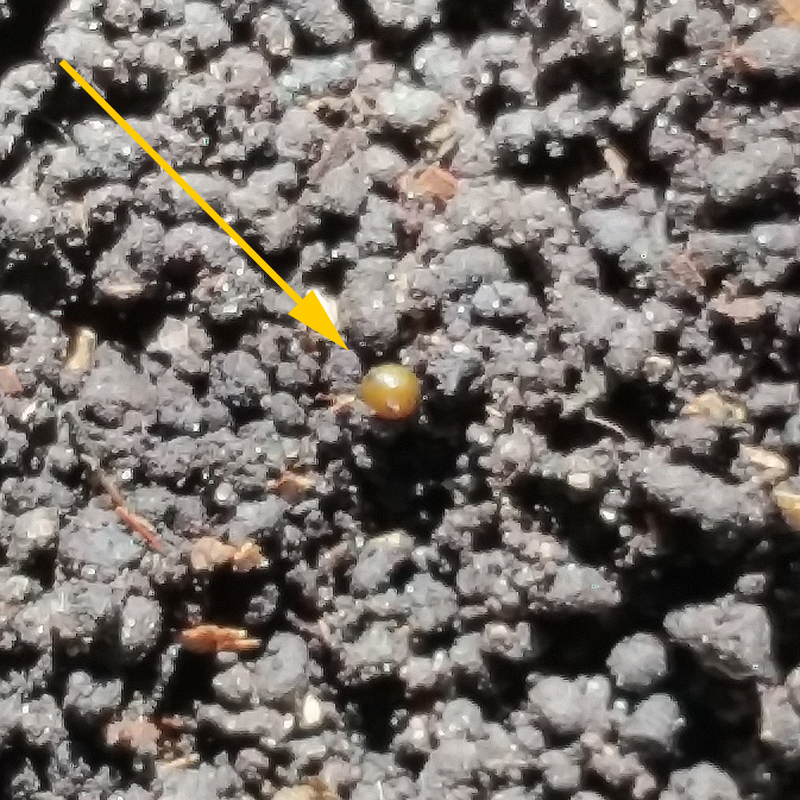
The worms only live for about 6 months, which is a very short lifespan compared to our more common earthworms, mostly dying off because of the colder temperatures of winter. Because they die off in November-December-ish, there’s a big increase in the nitrogen in the upper part of the soil and leaf litter, which is too late in the year for trees or bushes to take advantage of the nutrients, so, instead, the conditions favor changes in the bacterial composition of the soil which can be harmful to plants and soil animals.
Another big thing these jumping worms do is outcompete other earthworms. While there are some predators, like salamanders, in general, they seem to be considered lower quality prey. So, the jumping worm populations grow unchecked while other earthworms (which themselves are not native) fall behind.
A particularly successful strategy that enhances the expansion of jumping worms is that they are parthenogenetic, meaning that the females don’t need their eggs to be fertilized by sperm. This means that only one jumping worm can reproduce itself all by itself, giving rise to 50, even 300, offspring.
Why the worry about Jumping Worms?
A kind of earthworm that lives mostly in leaf litter or only in the very top part of soil, jumping worms don’t burrow very deeply. So, they don’t mix and nourish soil the way other decomposers do. They do help decompose leaf litter, but they overdo it, leading to loss of the habitat and shelter that litter provides other critters like salamanders, soil-dwelling insects and even ground nesting birds. Their castings cause soil aggregation and can increase soil erosion and also change the pH of the soil so that it’s less hospitable to most native tree seedlings and other plants. In fact, the changed soil conditions enhance the growth of invasive grasses and garlic mustard.
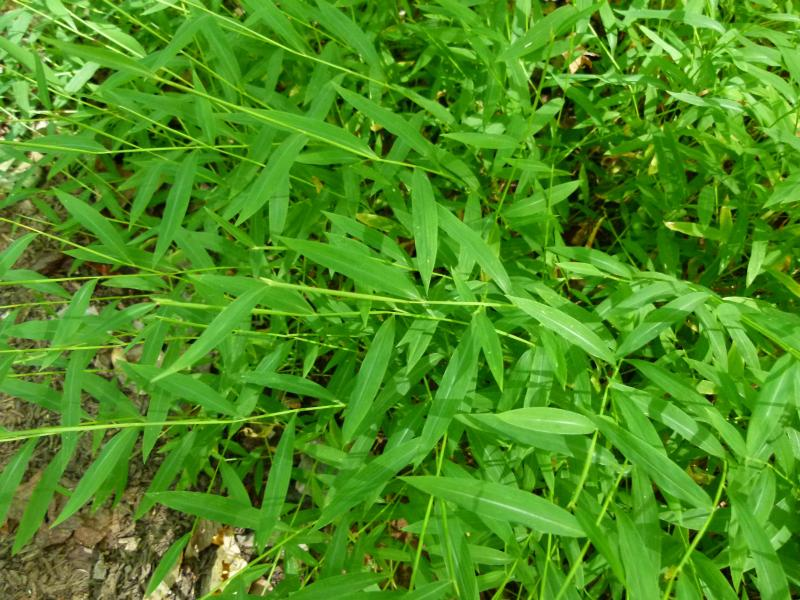
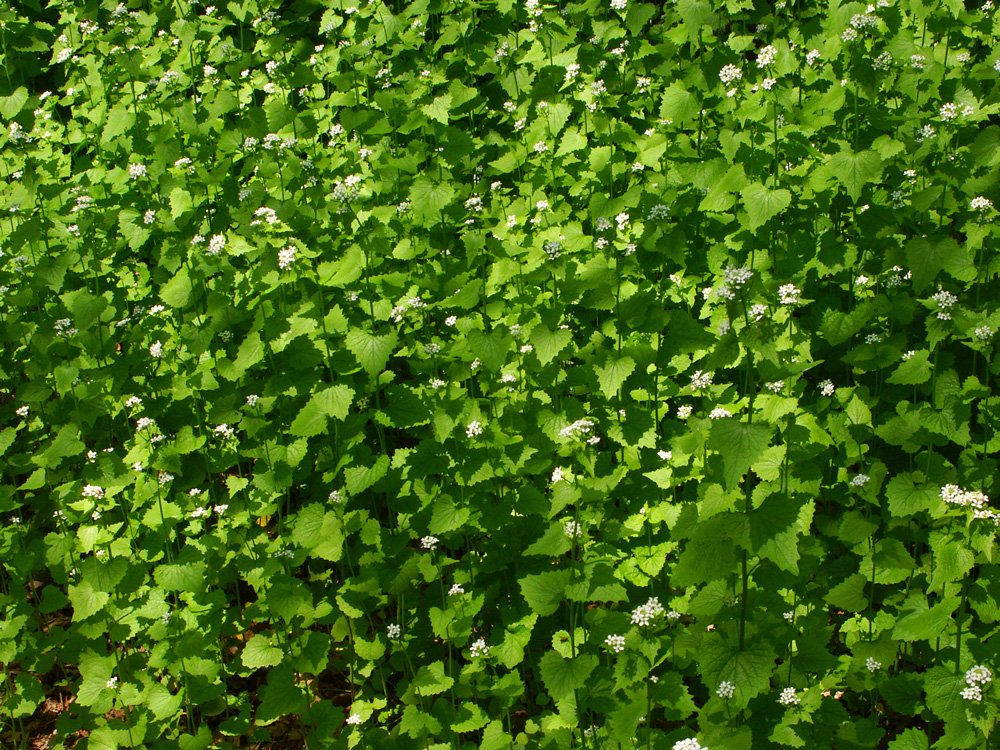
Because they reproduce so quickly and effectively, they can spread quickly and, without the predators, rapidly become dominant in the superficial soil and leaf litter. Even though they die off in the winter, their cocoons are winter-hardy and they emerge as soon as the temperature moderates. They even emerge during a winter “thaw” period, which is happening more frequently in our area.
While the biggest threat is to the soil quality, which hampers native plants and trees (and is a bad thing!), a lot of folks in the area seem most concerned about the nasty patches in their lawns. They’d love a pesticide to apply to kill them off. Not a good idea, since pesticides kill the good critters too, and also not super effective since the cocoons are so hardy.
What can we do?
Be careful when purchasing garden soil, mulch or compost. Ideally, you want the soil products to be cleaned of possible worms and cocoons. You might want to have your garden products exposed to high heat.
Be on the lookout for the adult worms in June, when they tend to be most numerous. They won’t hurt you if you grab them and put them in a bag to heat up in the sun or pop in the freezer. Scrape your shoes of soil after a hike or walk in areas where there might be jumping worms before you enter your own yard.
Be careful transplanting plants you get from local plant swaps. Knock off most of the adhering soil and look carefully for castings or cocoons. Even better would be to plant bare roots instead of potted plants.
If your garden seems to have a jumping worm infestation, you can cover the cleared surface of your garden with black plastic sheeting for at least three sunny, hot days, to warm the soil beyond 104 °F, which should kill adults and cocoons.
More ideas can be found at: https://dnr.wisconsin.gov/topic/Invasives/fact/jumpingWorm
This newsletter is devoted to explaining how biology works and how it is relevant to our daily lives. Most of us stopped learning about biology in high school or even middle school. And the way we learned it was as isolated concepts and vocabulary to memorize. I hope that this newsletter helps you rekindle that love of biology and might even help with better understanding of some of the important biology all around us. Please share this with anyone you think might want to take a look.
Thanks for reading!