
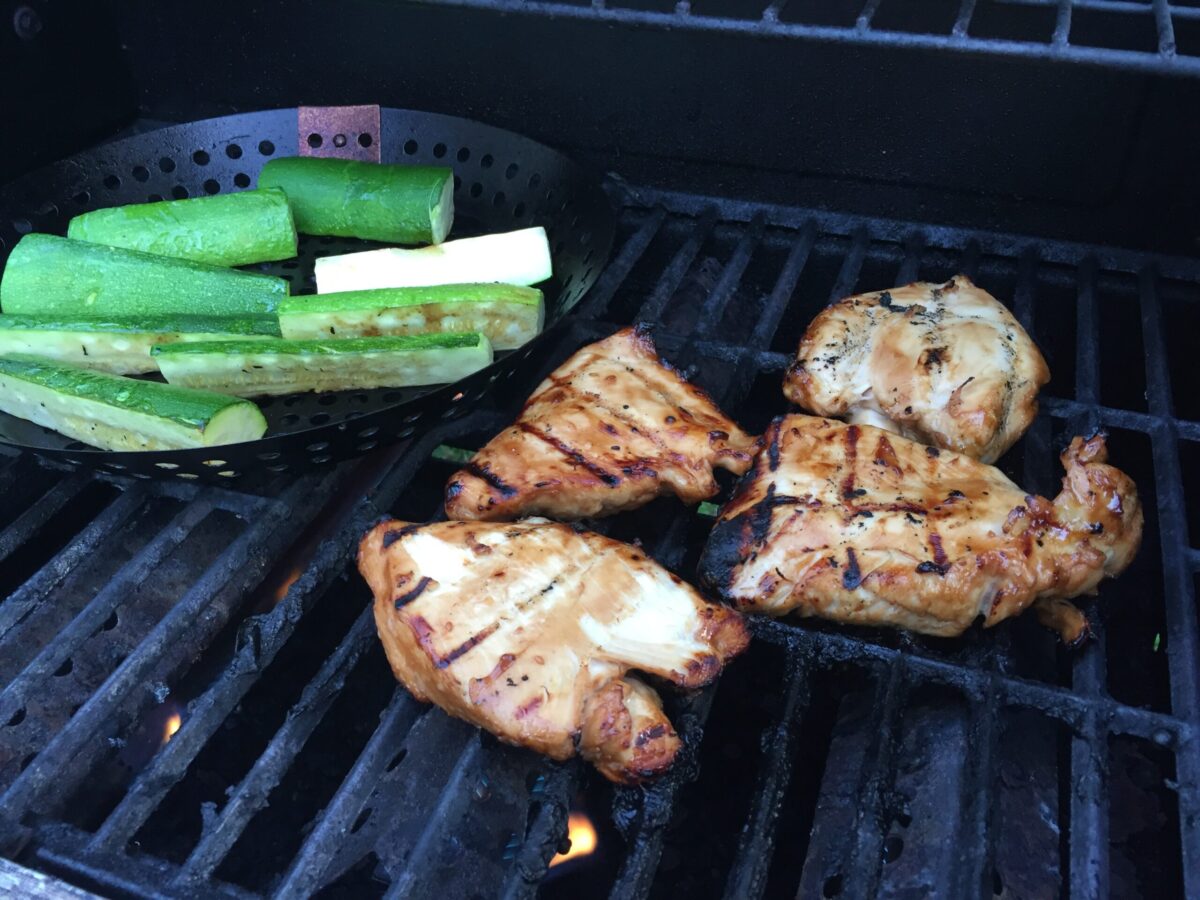
When you concoct a marinade for a meal, you often marinate your meat or whatever for a length of time – 30 minutes, a few hours, overnight. Why? Presumably to give the chemicals time to infiltrate the tissue being marinated. When you add salad dressing to your salad and let it sit in the fridge, the salad tastes different, as compared to drizzling the dressing on the salad freshly added to your plate. Leave it too long and you have a soggy, unappetizing mess. So, the time matters just as much as the ingredients.
Let’s think about time and marinades just a bit….
Perhaps the main effect of time in a marinade is that the chemicals can diffuse their way into the food item. Let’s take chicken meat.
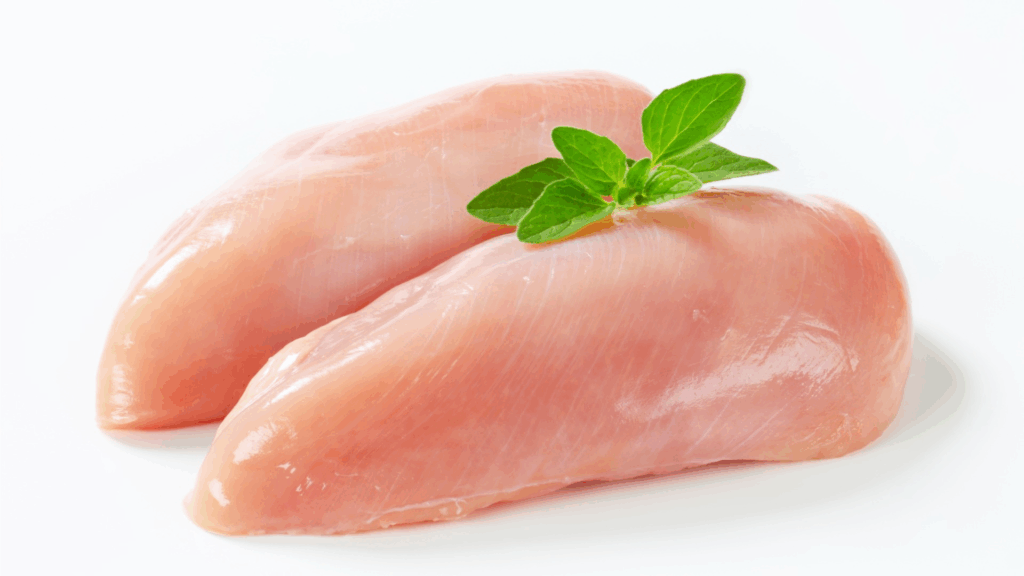
Chicken meat is skeletal muscle tissue, which is made up of long cells (called muscle fibers) gathered into bundles and again into larger bundles. The bundles are held together by connective tissue that give the muscle strength as it contracts to move muscles (connected by tendons to bones) to power flight in the case of chickens.
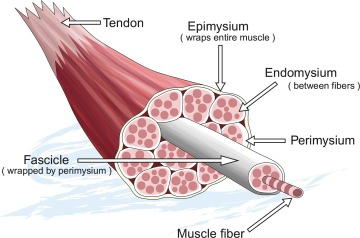
Image from: Encyclopedia of Meat Sciences
If you’ve ever marinaded chicken before grilling it, you’ll notice that the outer bits of meat take on the color of the marinade and, the longer you marinate it, the deeper into the breast tissue it penetrates. If you cut up the chicken into pieces before marinating, the marinade doesn’t need as much time to penetrate.
The ingredients of the marinade penetrate the muscle by diffusion, where the chemicals move from higher concentration (the bowl of marinade) to lower concentration (into the muscle). Molecules diffuse more or less easily depending on their size and charge, and what kind of environment they are passing through. So, smaller molecules typically move more easily. Nonpolar, fatty compounds, like oils, penetrate fatty tissues readily. Of course, here we’re talking about molecules moving in the tiny gaps between cells. The gaps are edged by all types of proteins and fats that make up the connective tissue. Given enough time, of course, the molecules keep on diffusing and, when they are able, even penetrate the cells.
Teriyaki marinade is one of my favorites for chicken. My go-to recipe, that I got from my mother, is a mixture of lemon juice, minced garlic, soy sauce, sugar and vegetable oil.
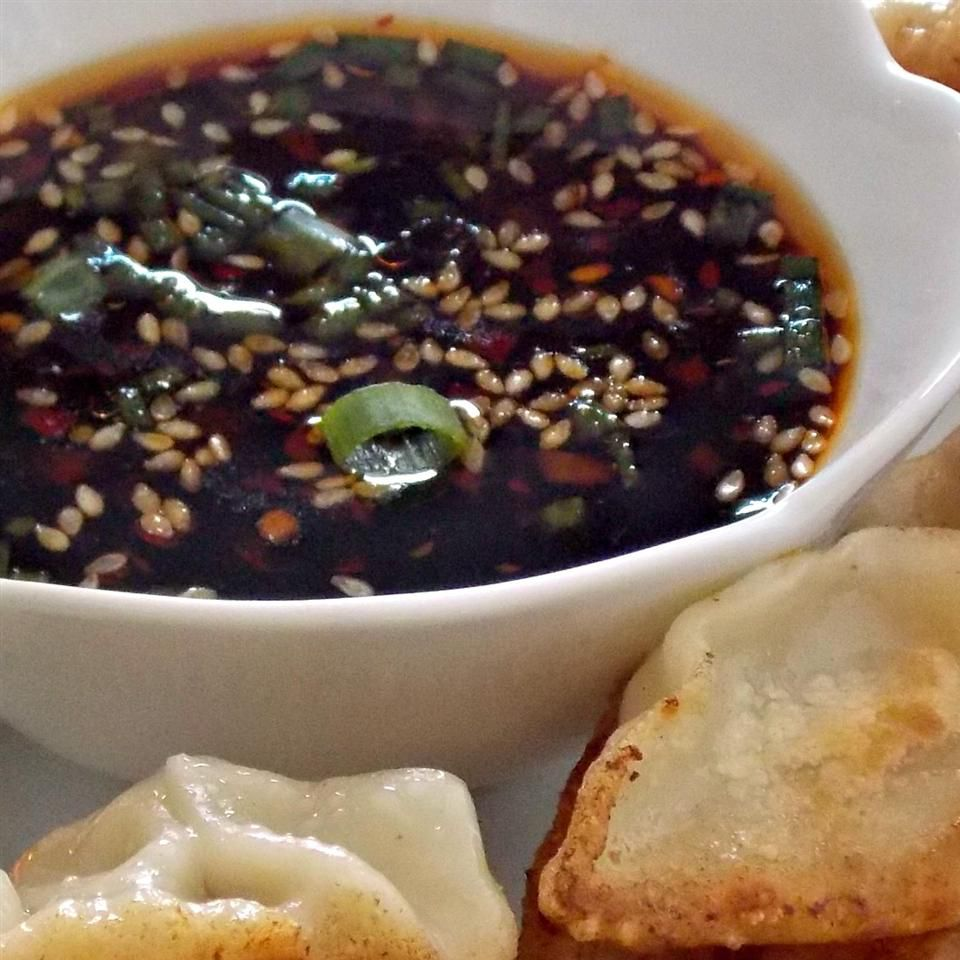
Marinade recipes where you let things steep often contain acid components like balsalmic vinegar or lemon juice. What the acid does is interact with the muscle tissue proteins, changing their shape and weakening their interactions with each other. We call this “tenderizing” because the muscle meat tissue loosens up. In chemical terminology, the acid denatures the proteins, so their structures loosen up. Leave a tissue in acid too long and the whole structure falls apart (and even might dissolve a bit).
Soy sauce is a mixture of fermented/brined (salt and water) soybeans and starch (often wheat). Starch is sugar molecules. The other big component of the fermented soybeans is amino acids. So, salt (small, charged molecule), amino acids (still pretty small, but some charged, some uncharged), sugars (charged). As they diffuse into the tissue, they might bind with the proteins and charged, polar parts of the tissue, imparting flavors to delight your tastebuds, and also changing the shapes of the tissues, so changing the texture of the meat. Various other chemicals are in there, too, including additives that might be alcohols or ketones that deepen the complexity of the flavors. It turns out that soy sauces are pretty complex, but I’m focusing on the kind of chemical, rather than the particulars.
The garlic has a variety of chemicals in it, including saponins, that can partially dissolve or breakdown connective tissue. There are some of these chemicals from the soybeans, too. Another chemical in garlic, enhanced by crushing the garlic clove, is an enzyme that can breakdown proteins (and muscle is basically protein), acting to help tenderize the meat, as well as impart flavor compounds. I think it’s way tastier to use fresh garlic cloves, rather than already minced (in a jar) or powder, because many of those compounds are lost in the processing of the garlic. With garlic in a marinade, freshly minced is best.
Some marinades call for ginger or pineapple juice. Both of these, when freshly prepared, have enzymes that break down protein, so are great tenderizers in their fresh forms. The powdered, or canned varieties have flavor compounds, but the enzymes are no longer active.
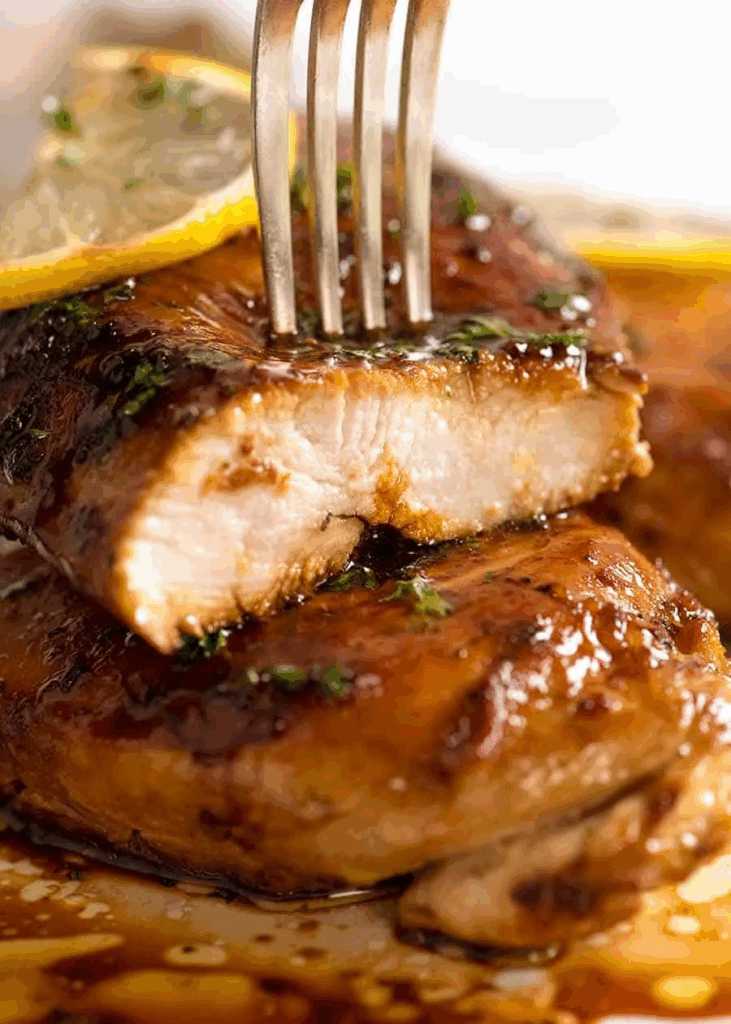
It takes time for the molecules to diffuse in between the muscle tissue cells and structures. If you’ve broken up the muscle first, like pounding it with a meat hammer, you’ve broken up the tissue mechanically, so the marinade penetrates much faster.
The oil in my marinade can dissolve some of those chemicals from the other components (the soy sauce, the garlic) and help them penetrate into fatty parts of the meat. It also imparts a moistness mouth feel when you eat the marinated food.
So, a marinade not only has flavor chemicals, it has chemicals that interact with the muscle tissue and break it down. Time affects both processes- the penetration of the flavor molecules and the chemical reactions between muscle proteins/lipids and the marinade chemicals (like enzymes, salt, etc).
What happens if you marinate something for too long?
As long as you have the tissue in the marinade, the various processes continue, including the protein “softening”- breakdown. This can make the tissue mushy or the flavors (especially salty or bitter) too overpowering. Basically, the diffusion process might go to the point where the concentration inside the tissue is pretty close to the concentration of the marinade in the bowl. Imagine drinking the marinade straight!
So, when you are marinating something, think about how thick and what types of tissues the ingredients need to diffuse through. Thicker, tougher, or more complex (like skin-on, with bone, versus skinless/boneless) takes more time for diffusion. And, enzymes need time to work- more time, more breakdown, until the enzyme itself inactivates.
Another aspect to the process is temperature. Diffusion is faster in warmer temperatures, slower in cooler temperatures. So, marinating on the kitchen counter is faster than in the fridge. Marinating cool meat is faster than frozen. You get the idea.
I want to dwell on this idea of time in the marinade for a while….and think about how we are marinating in the chemicals around us and the role time plays. Stay tuned!
This newsletter is devoted to explaining how biology works and how it is relevant to our daily lives. Most of us stopped learning about biology in high school or even middle school. And the way we learned it was as isolated concepts and vocabulary to memorize. I hope that this newsletter helps you rekindle that love of biology and might even help with better understanding of some of the important biology all around us. Please share this with anyone you think might want to take a look.
Thanks for reading!