
I want to be part of the neem team. I want to believe in the neem dream. Is it too good to be true?
As more and more awareness slowly seeps into American homeowners’ ideas of a lawn that doesn’t kill their pets and neighborhood birds or sicken their children, Americans head to their local Home Depot or Lowe’s in search of “greener” and “safer” alternatives to poisonous pesticides and herbicides that contain glyphosate and other synthetic chemicals derived from fossil fuels.
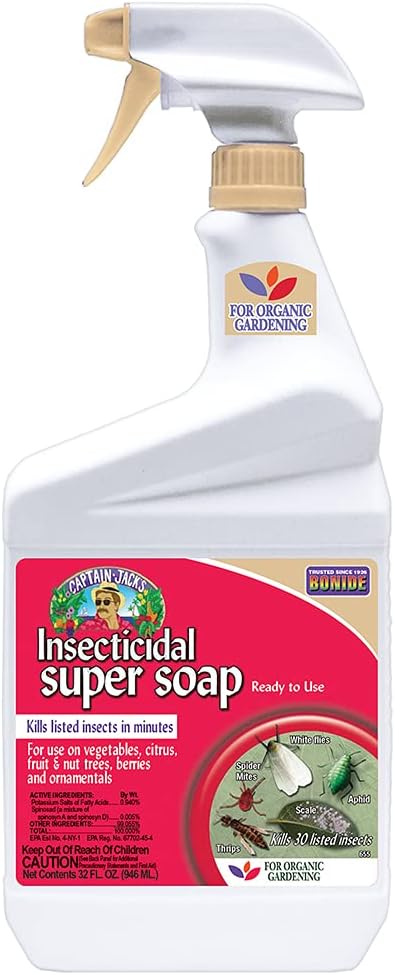
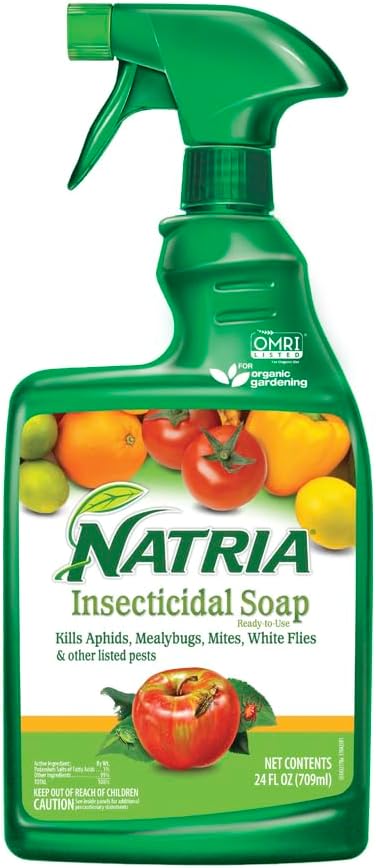
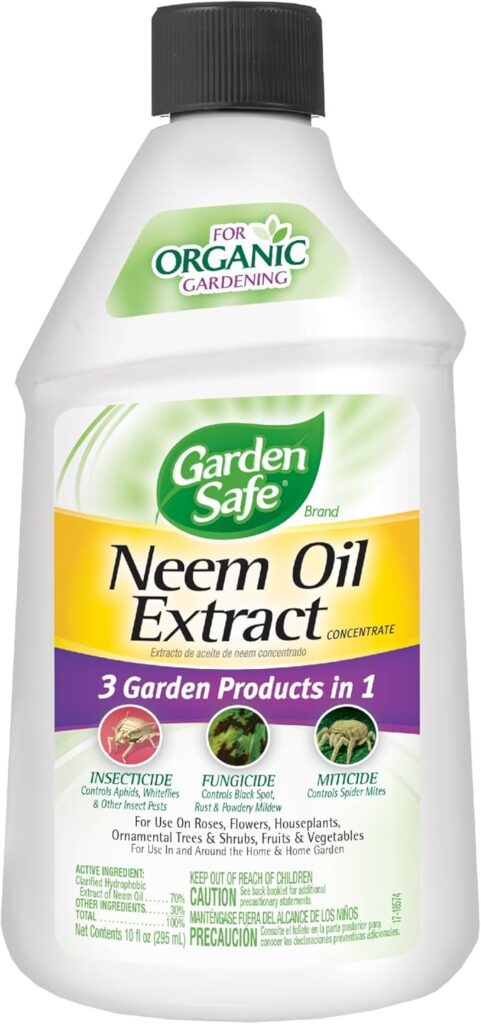
A popular alternative: Neem oil-containing products like Bonide’s Captain Jack’s Organic Neem Oil Spray or Bayer’s Advanced Natria Neem Oil or Garden Safe Neem Oil Extract.
Are they safer?
Let’s break it down. The active ingredient in Bayer’s Natria Insecticidal Soap (at 0.9%) is “clarified hydrophobic neem oil extract,” which of course means that there are 99.1% “other” ingredients that we don’t know about. Right on the product label on the Home Depot website, it says on one line, “Not safe for kids and pets.” On the very next line it says, “Yes” in the line “Safe for Pets.” I’m already confused.
Is it safe or no?
The Highlights section of the Product details on the website says that Natria is an insect killer and a fungus killer and can be used indoors on houseplants and outdoors in the garden. I looked up the product label AND the SDS (safety data sheet, required by law to be available). No information at all about the “other” ingredients. So, I looked at Captain Jack’s product, which claims to be effective against insects (insect killer), fungus (fungicide) and mites (these are arachnids, like spiders). This product has the same amount (0.9%) of neem oil extract and “other” (99.1%). The companies do not have to specify the “other ingredients,” but a bit of general research suggests that some of these “inactive ingredients” include emulsifiers and stabilizers. That’s just as opaque.
Here’s a list of possible emulsifiers and stabilizers that could be included, according to the EPA website. But, of course, we have no idea what’s really in the bottle since the companies do not have to reveal the contents beyond what they call the “active” ingredient.
| General category of “other” ingredient | Possible concerns |
| Ethoxylates (including phenol based) | some can be harmful to aquatic organisms or cause health effects (very vague) |
| Sulfonates (including benzene based) | some used for industrial lubricants, derived from petroleum, detergents and cleaning products. These can be very toxic |
| Benzene, toluene, xylene | toxic, carcinogenic, “pose significant health risks” |
| Vegetable oil concentrates | these seem nontoxic and help the active ingredient gain access to the plant and disperse it |
| Botanical oils like eucalyptus oil | effective insecticide that’s biodegradable and also helps emulsify neem oil |
| Orange peel extracts | effective against many but not all insects, helps emulsify neem oil |
There’s some potential that some of these products might indeed be safer. But, with 99.1% of the ingredients held in secret, we don’t know. The top three rows in the table above are all quite toxic chemicals to aquatic life, soil life, our pets and us. Until companies have to reveal all the ingredients in their products, your guess is as good as mine as to the actual safety of the product.
How about the neem itself- the “active” ingredient? Neem oil (and powder) comes from a tree native to regions of India, Pakistan and Myanmar, and is also cultivated in Southeast Asia, West Africa and Mexico. Extracts of the seeds contain lots of different chemical compounds that kill or repel insects and fungal pathogens and even parasitic worms. It makes sense that the seeds have all these protective chemicals- they help the seeds survive to germinate and become new trees. The leaves, bark and other plant parts contain other chemicals that can be used in traditional medicines and even toothpaste. Some chemicals have anti-bacterial properties. Young leaves and flower buds can be boiled and pickled and used in some southeast asian cuisine. These varied uses require care be taken, though, as young children can get sick if they ingest too much.
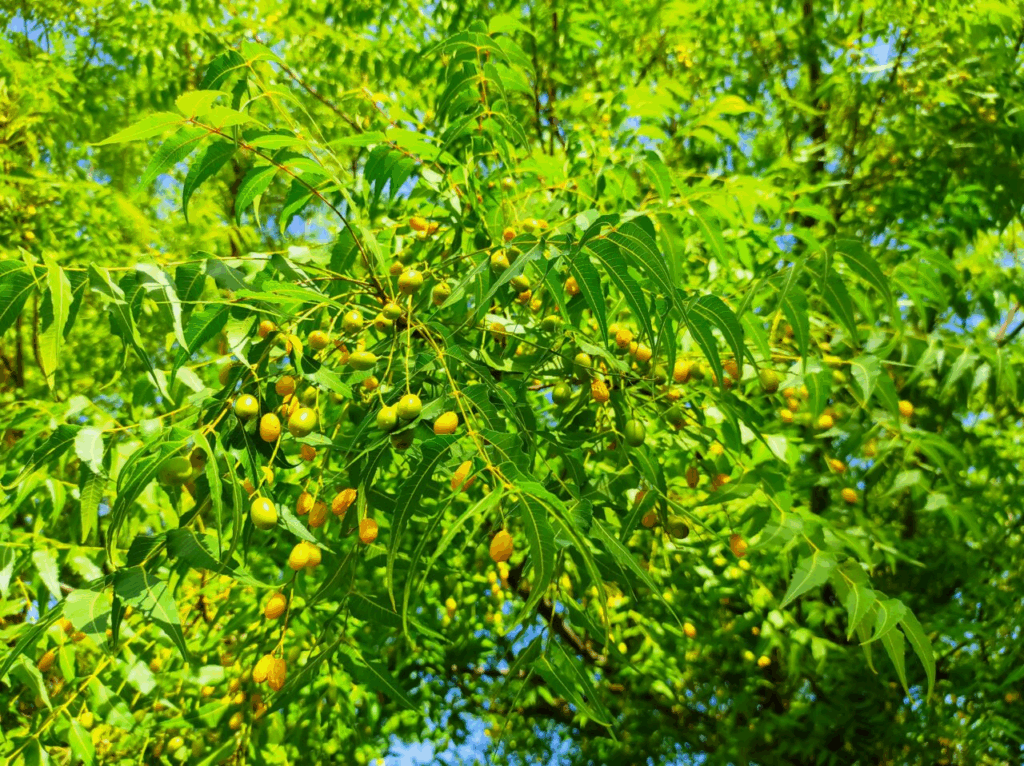
The trees, related to Mahagony trees, are large, fast-growing and can live up to 200 years and they produce huge numbers of little yellow olive-like fruit. Neem trees thrive in drought-prone, hot areas like Pakistan and can tolerate poor quality soil that’s sandy. They provide shade for towns and communities and are also used for timber. They seem like all-around great trees, except when they have been introduced to areas where they are not native, like Australia, where they are considered invasive.
I recently read an interesting science article that reviewed the many ways in which neem extracts are used as biopesticides. The 2022 article was written by Stephen Adusei and Samuel Azupio of Value Addition Division, Council for Scientific and Industrial Research, Oil Palm Research Institute, in Kade, Ghana. Here’s a summary picture from their article showing many different uses just in agriculture.
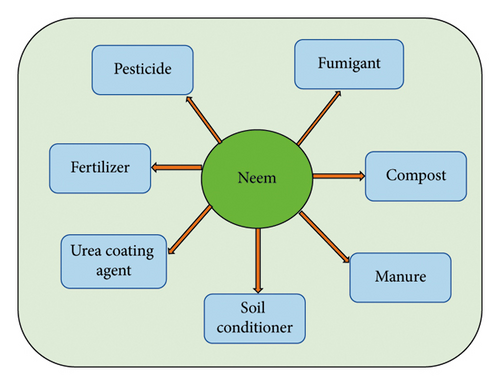
The Way Neem Works
The extracted neem oil is mixed with a detergent to help it mix with water and sprayed on the plant and ground around it. The plant can internalize the neem chemicals and they get distributed throughout the plant. Insects that seek to eat the plant are repelled by the presence of the neem. This is a great way to protect plants from pests- the insects don’t die, but they do not feed on the plants, in some cases because the plants smell bad to the insects. Some insects suffer growth defects or problems moving after ingesting or being otherwise exposed to neem chemicals. Others are repelled by the neem and do not lay their eggs on plants that harbor the neem chemicals.
A powder extract of neem from the seeds is also a potent fungicide, helping protect potatoes from blight or tomatoes from rot. These actions are sometimes even more potent than the synthetic fungicides in the garden stores and without the toxic side-effects for other organisms, like birds, mammals, and us. It is good at combating so many different diseases and infestations because the leaves, seeds and flowers have dozens of different chemicals that protect these plant parts from pests. Because there are so many chemicals, pests don’t develop resistance, the way they do to man-made, single chemical pesticide agents.
A down-side of neem oil is that it is biodegradable. But, wait! That’s an upside in terms of being friendly to the environment and better for our own health. Scientists are working on ways to enhance the staying power of neem products (oils, sprays, powders) by examining different ways to treat plants. A root-soak method (where you water the soil to the roots in water that has neem, possibly mixed with a biological emulsifier) allows plants to take up the neem chemicals and distribute them throughout the plant. In this method, the neem chemicals seem to be long-lasting, compared to surface spraying, where the chemicals degrade after a time.
Srinivas Reddy and Mounica Chowdary, of the Fruits, Citrus Research Station in Drysrhu, Tirupati Andhra India, brought together a host of research showing that the mode of exposure or delivery of the neem makes a big difference in the toxicity to aquatic organisms and even mammals. When neem extracts are used directly, they are not toxic to aquatic animals and mammals. This seems largely because the neem extract is biodegradable and can be handled by the organisms’ body. But, in contrast, if a more processed, commercialized neem product was used, where it was mixed with various synthetic additives, the toxicity was enhanced. This isn’t surprising, of course, because these additives are designed to extend the time that the neem is active before being degraded, to help it withstand UV light and heat, etc. So it’s more toxic as a result of the additives. And, quite possibly, the additives are toxic (like in the table above). This is true of all pesticides that are industrialized. The trick is to develop pesticides that ONLY work on the target organisms and that don’t end up in the environment to affect non-target organisms. This takes more of an individualized approach grounded in the biology of the interactions between pest and plant. The tendency, however, is to just use high concentrations and a wide spraying application, which is harmful to pests and beneficial insects alike.
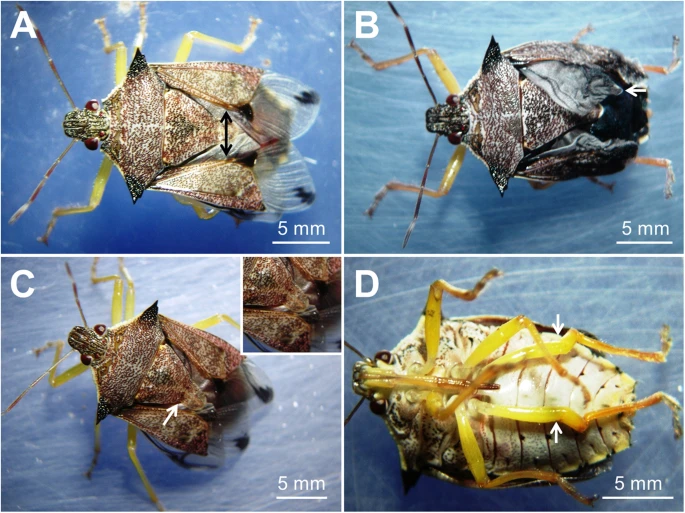
The neem oil strategy does take advantage of the biology of the chemical warfare waged by plants to protect themselves from destruction by insects, fungus and other attacks. The warfare and interactions are highly selective. Plants produce chemicals that repel or sicken the organisms that eat them. In turn, those organisms develop resistance so they can live and eat another day (evolutionarily speaking, of course). Think: Koalas eat Eucalyptus, or Monarchs feast on milkweed. Some plants, like Neem trees, make a complex stew of dozens of chemicals, designed to repel just about every possible predator.
This general arsenal is distributed throughout the tree- in roots, leaves, bark, and seeds. There are different combinations of the chemical weapons in different parts, tailored for the types of enemies being defended against.
Biopesticides, that take advantage of the chemical defenses already in existence in nature, along with approaches that limit the release of the chemicals willy nilly into the environment and that take into account the biological interactions that are relevant, is a much better approach than using synthetic compounds that are more like sledge hammers. Perhaps more expensive of time and creativity, but much cheaper in the long run if you account for the preservation of the environment and our health.
This newsletter is devoted to explaining how biology works and how it is relevant to our daily lives. Most of us stopped learning about biology in high school or even middle school. And the way we learned it was as isolated concepts and vocabulary to memorize. I hope that this newsletter helps you rekindle that love of biology and might even help with better understanding of some of the important biology all around us. Please share this with anyone you think might want to take a look.
Thanks for reading!