
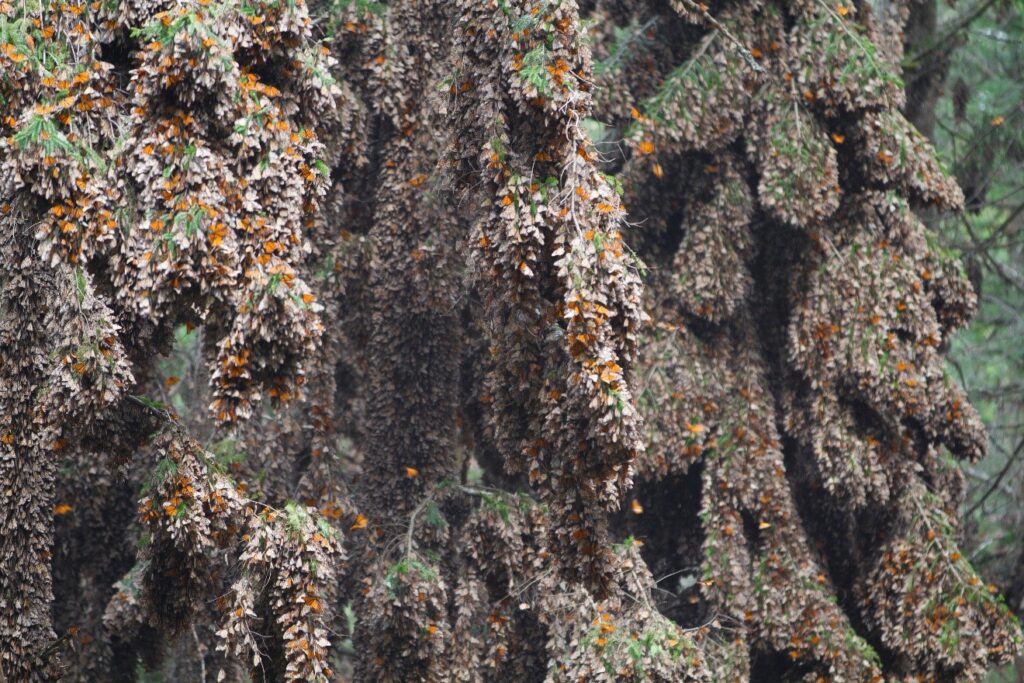
High in the misty mountains of central Mexico, eastern Monarch butterflies rest for the winter in massive clumps hanging from trees, protected from harsh winds and snow.
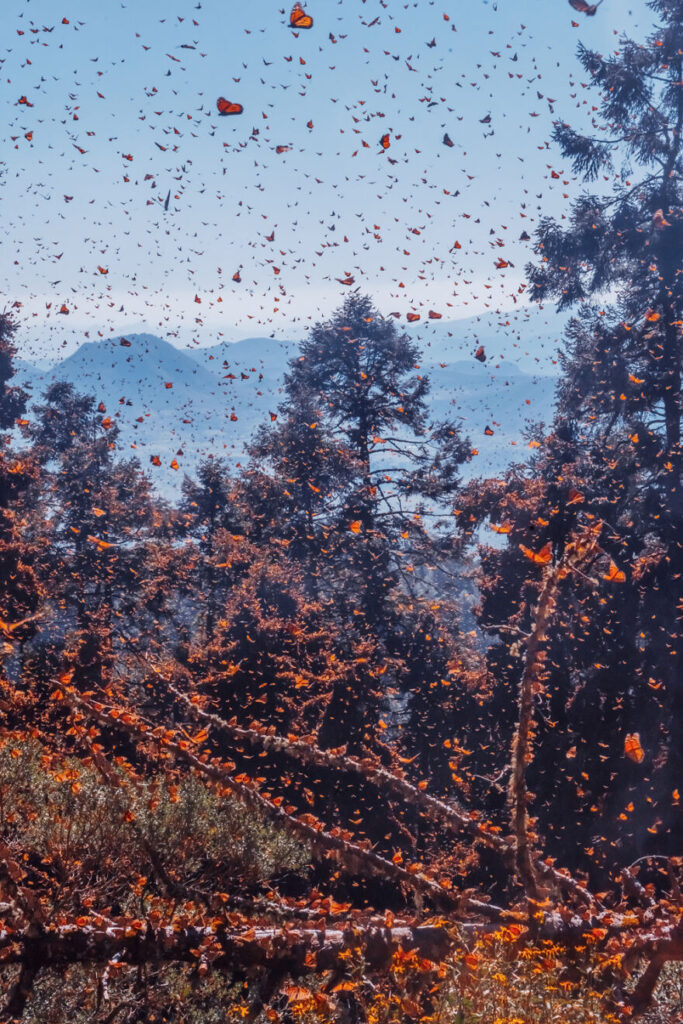
Then, in March, in response to lengthening days and warming temperatures, they begin an incredible journey north, fueled by the nectar of flowers in bloom in the southern spring, laying eggs on growing milkweed plants once they get to Texas and the southern US as far east as Florida. These hardy butterflies have logged thousands of miles, have survived predators and a winter in the mountains and have returned to the southern US before they lay their eggs and die.
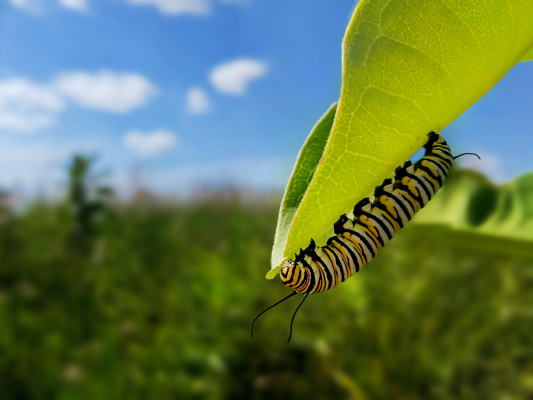
Their caterpillar kids are super picky eaters and only eat the leaves of the milkweed plants they hatched on. If there are no milkweeds, there will be no Monarchs. The caterpillars from Texas to Florida metamorph into butterflies in about three weeks and fly farther north, into the midwest, Pennsylvania, the Ohio valley, and the Great Lakes, where they lay eggs on milkweed plants, sometime in late spring. These grandchildren caterpillars grow up as summer Monarchs, that continue the journey north and east feeding on nectar-rich flowers along the way as they travel as far north as Maine and Canada, to lay eggs on milkweed plants that develop later in the summer than those down south. These late summer great grandchildren caterpillars are the ones that grow up destined for the long trip south to Mexico, in response to the shortening days and cooler temperatures of autumn. They fly in large groups south for three thousand miles, to reach the same mountains (and sometimes the very same trees) that their great grandparents sheltered in the previous winter.
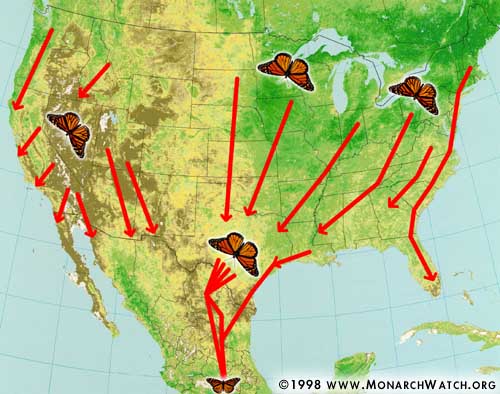
Monarch butterflies are one of Nature’s most amazing migrators. It takes four generations of Monarchs to complete one full migration journey, and they are dependent on milkweed plants to feed the caterpillars and nectar-rich flowers to feed the adults in what seems like a miraculous syncopated, multigenerational dance. The rhythms of milkweed plant growth and bloom of nectar-bearing flowers serve as the base beat for the butterfly dance. Disrupt any dance partner and the whole thing collapses. If flowers develop too soon, there will be no nectar on arrival. If milkweed plants aren’t around, the eggs don’t hatch into caterpillars. Timing and dance partners both essential to success.
Right about the time we start getting gardening catalogs in the mail and see gardening displays at the local hardware stores, days are getting longer. Hundreds and even thousands of miles away, birds that have been spending the winter in warmer climes like South America, Mexico and even Africa, get antsy about getting on the move back north. Unlike our retired human snowbirds wintering in Florida or Arizona, these birds begin getting ready to make the long trip to breeding grounds, in hopes of having a new batch of offspring (although maybe our retired snowbirds come north to see the grandkids).
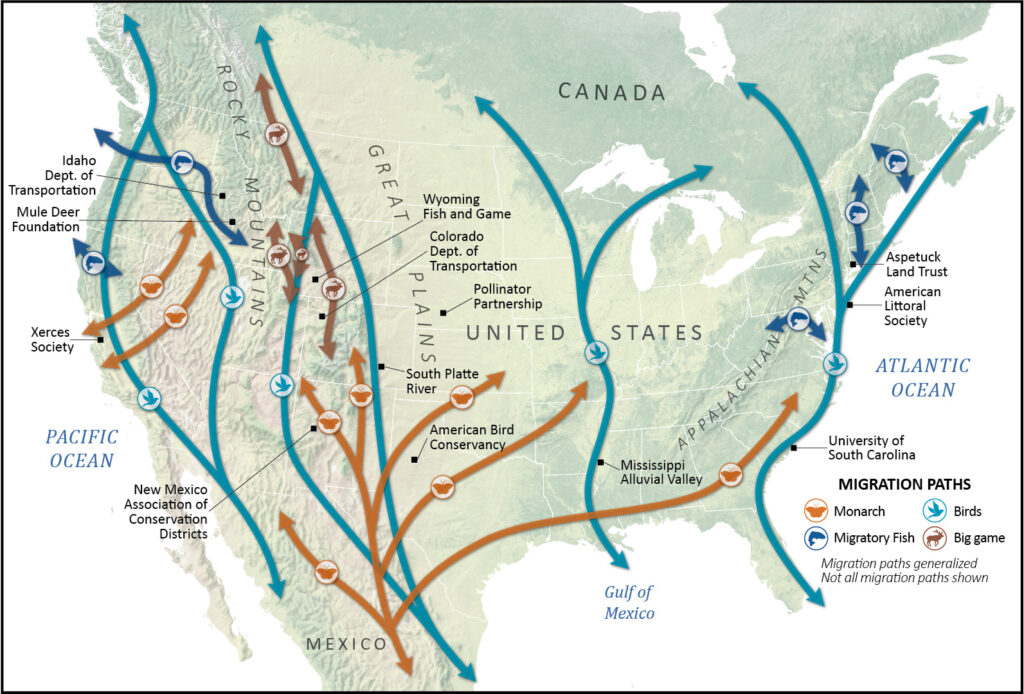
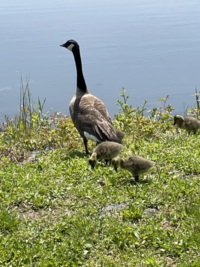
We mark the certainty of spring coming when we hear the familiar honking of geese and see the V formations in the sky as they return to our northern waterways. Unlike many North American birds, Canada geese co-exist with humans and also have considerable flexibility in their lifestyle. While many still migrate north from winter residences in the southern US, we see more often nowadays populations of geese that stick around their northern breeding grounds all year. The geese seem comfortable hanging out in parks that have lakes or ponds, or on college campuses, even on golf courses. With warmer winters and less snow cover, geese can continue to graze on grasses and turf, and forage for water plants in unfrozen lakes and ponds. Even if they don’t migrate, though, when spring comes, geese pairs who have mated for life will build nests and raise their chicks from late winter to mid-May. In order to successfully lay eggs and raise a brood of goslings, the geese need to have adequate food resources available, which they certainly do by spring, with longer days of sunshine and warmer temperatures encouraging plant growth and ice-free water. As northern climates change, it’s likely that more geese will give up migrating, since those that are resident in winter can get a jump start on the mating season with the earlier emergence of spring water plants.
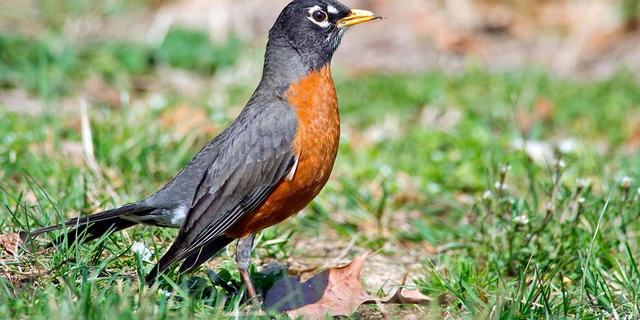
Spring has really arrived when we see the red-breasted robin hopping in the grass grabbing unsuspecting worms. It turns out that many robins only migrate short distances, if at all. There are winter flocks that remain behind in the Northeast, except in colder places like Canada. Western robins, which are still migratory, are arriving almost two weeks earlier to many spots like the Rocky Mountains and places in Canada. Those that arrive earlier get the choicest food and the best nesting sites.
How do migrating animals “know” when it’s time to migrate back north? It turns out that, while lengthening day length triggers the urge to begin to migrate, many birds can alter how quickly they migrate north based on local conditions like temperature, snow cover, and storms along the way. With earlier and warmer springs, particularly in more southern areas, the birds pick up the pace anticipating it’ll be warmer in their breeding grounds. Unfortunately, though, weather has become even more unpredictable and birds might arrive too early (like this past spring as a result of the overwhelming snow cover in the western mountains of the US) or too late. They are in a race for the food on which they depend- insects and plants.
Local conditions of snow cover and day or night temperature play a key role in the timing of insect emergence from the soil and flowering of early spring plants. These early sources of food are critical for migrating birds to restore all the weight they lost while migrating and to fatten up to build nests, lay eggs and raise chicks. If birds arrive too soon, they run the risk of not having sufficient food to be successful. If they arrive too late, they run the risk of missing the peak of their food supply.
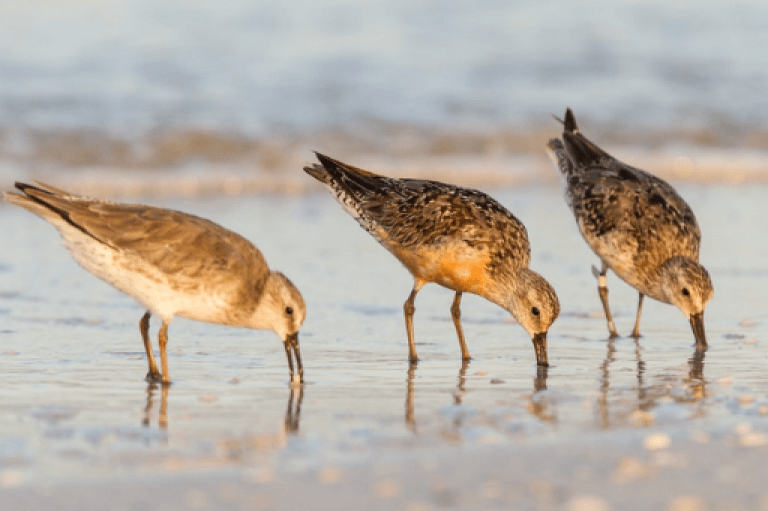
The Red Knot Sandpiper winters in Argentina and summers in the Arctic, making a tremendous journey that includes a stopover in the Delaware Bay in Maryland on their way north. The sandpipers arrive just in time to feast upon a multitude of horseshoe crab eggs, refueling for the last long leg of their journey. The annual rhythms of the Red Knot and the horseshoe crab egg-laying are intertwined and coincide with a precision honed by generations of evolution. Anything that messes up the timing of both the egg-laying and the bird arrival would spell disaster for the Red Knot.
In a 2020 study by Maria Maglianesi and team on flower/pollinator pairs in the Talamanca Mountains in Costa Rica, hummingbirds, butterflies and bees that only pollinate specific flowering plants, particularly those with a short flowering time, were more at risk for mismatches between the time the flowers are available and when they arrive to pollinate them.
For tens of thousands of years, rising temperatures correlated well with the increasing day length, causing a gradual snow melt, after reliable weeks of winter chill and snow cover. In a wonderful symphony, birds arrived in time to eat caterpillars that had emerged in time to eat plants that flowered in time for pollinators. The birds ate enough to restore energy reserves used up during migration, with plenty left to build nests, lay eggs and raise a clutch of baby birds, feeding them on plentiful insects, nectar and seeds. More than half of North American birds are migratory, responding to cues like day length and temperature to make the annual trips north and south, in a rhythm that’s been a successful way to benefit from food resources at just the right times for millenia. The drive to migrate is literally in their genes.
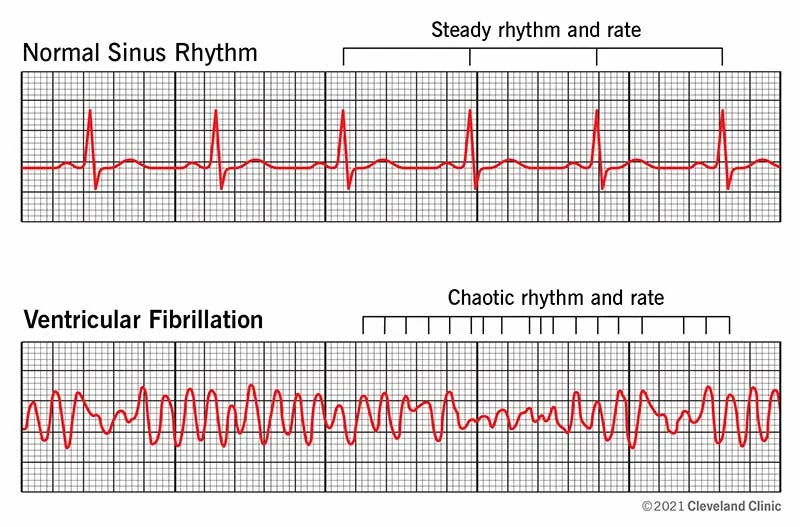
Now, though, in one human lifespan, arrhythmias are breaking out in these synchronized cycles of growth and birth. Warmer and shorter winters mean less snow cover and shorter cold periods, which interfere with plant leaf-out and flowering, as well as insect development in the soil. Many plants and insects emerge earlier, or fail to develop because of the shortened cold periods, meaning less food is waiting for the migrating birds when they arrive. Some migratory birds have stopped migrating, which means they are now competing for limited food sources with the non-migrating organisms that have lived there year-round (not to mention depriving their southern over-wintering predators with their food source).
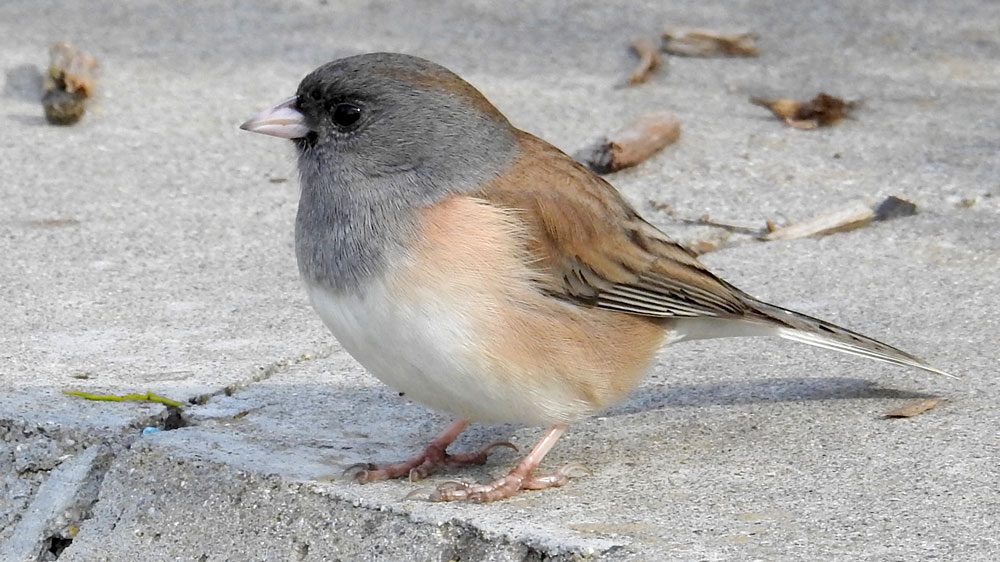
About 40 years ago, a sub-population of dark-eyed juncos from San Diego, who used to migrate from Central and South America to the Laguna Mountains in California, established a resident population on the University of California San Diego campus. These birds are comfortable around people, nest in the campus trees rather than on the ground, and have more chicks in a clutch. Talk about flexibility and resilience in the face of changing conditions!
Lise Aubry and Cory Williams, from Colorado State University, in a presentation at the 2022 annual meeting of the Society for Integrative and Comparative Biology, summarized the current knowledge of how and whether timing mismatches are part of the picture of declining biodiversity across the planet. There is no one pattern of change. Some organisms are changing together- for example, the migrating birds arrive earlier, just as the earlier flowering and earlier insect emergence, so they all remain synchronized enough to be successful.
But others are not so lucky or flexible. Some migrating animals arrive too early or too late and so do not have sufficient energy stores to successfully lay eggs or enough food to feed their young. Some earlier arriving migrators eat so much of the too-young plants that the plants cannot complete their life cycles successfully, causing widespread problems for all the other organisms depending on them.
Aubry and Williams suggest that there are four types of responses that animal populations have to our rapidly changing world: 1) Some individuals or entire populations might stay put rather than migrate, 2) Some populations might change aspects of how they live (new food sources, different breeding processes), 3) Some might shift where they live or where they migrate to or 4) Some might persist in their life styles and slowly die out. What happens depends on the flexibility built in to the animal’s genes, as well as that of the other organisms with which that animal interacts. It also crucially depends on how quickly animals and environments change and how many changes are required.
It rarely makes the news how our crazy, unpredictable climate and weather changes are affecting the non-human inhabitants of our precious planet. Next time you’re feeling frustrated that you are having a hard time planning your garden, or your vacations, or what clothes to wear because our seasons no longer make sense, imagine the chaos and cacophony wrought on the other rhythms of life.
Research articles mentioned in this post:
https://esajournals.onlinelibrary.wiley.com/doi/epdf/10.1002/ecy.3162


August 28, 2023
Who’s counting:
https://news.northeastern.edu/2023/08/25/monarch-butterfly-endangered-conservation/
August 15, 2023
Beautifully written, poetic. Rachel would be pleased!